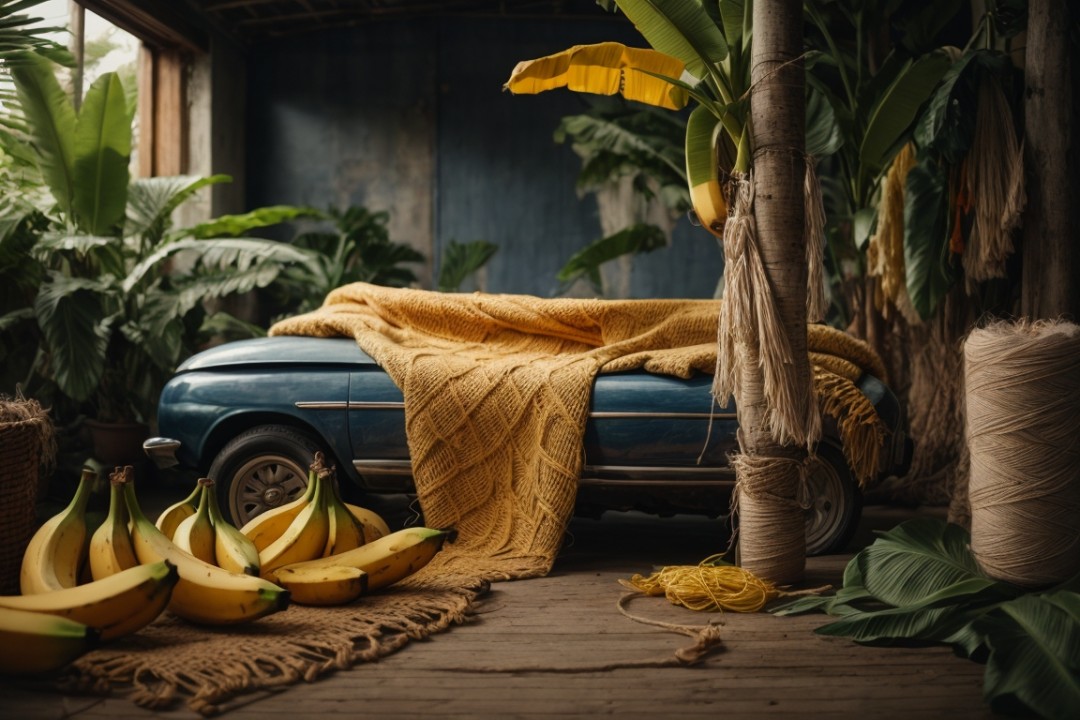
Banana tree trunks, specifically the pseudo-stems, can be repurposed into various sustainable products through innovative recycling techniques. Here’s a look at some recycled products made from banana tree trunks:
1. Banana Fiber Textiles
- Clothing and Fabrics: The fibers extracted from the banana pseudo-stem can be woven into textiles. These fibers are strong, biodegradable, and have a silky texture, making them suitable for clothing, bags, and home textiles like curtains and tablecloths.
- Rope and Twine: The strong, fibrous material from the trunk is often spun into rope and twine, used for various agricultural and domestic purposes.
2. Handicrafts and Artifacts
- Baskets and Mats: Banana fibers are commonly woven into baskets, mats, and other decorative items. These products are not only sustainable but also bring a rustic, natural aesthetic to home decor.
- Paper Products: The pulp from the banana trunk can be used to create handmade paper, which is then used for stationery, gift wraps, and eco-friendly packaging.
3. Compostable Tableware
- Plates and Bowls: Some manufacturers use the banana trunk to create biodegradable plates, bowls, and cutlery. These are particularly popular as eco-friendly alternatives to single-use plastic or Styrofoam products.
- Food Packaging: The fibrous material can also be processed into biodegradable food packaging, aligning with the growing demand for sustainable packaging solutions.
4. Furniture and Building Materials
- Fiberboards: The pulp from banana trunks can be transformed into fiberboards used in furniture making and as building materials. These boards are lightweight, durable, and an eco-friendly alternative to traditional wood or particleboard.
- Laminates and Veneers: The outer layers of the banana trunk can be used to create laminates and veneers, which are then used to cover furniture, providing a natural, textured finish.
5. Bioenergy
- Biogas Production: The organic matter from banana trunks can be used in anaerobic digesters to produce biogas, which is a renewable source of energy.
- Biochar: The remaining biomass can be converted into biochar, a type of charcoal used to improve soil fertility and sequester carbon.
6. Paper and Cardboard
- Recycled Paper: The fibers from banana trunks can be used to produce eco-friendly paper, which is then used for printing, packaging, and crafting.
- Cardboard Packaging: Similar to recycled paper, banana trunk fibers can be used in the production of cardboard, especially for packaging that emphasizes sustainability.
These products not only utilize a renewable resource but also contribute to reducing waste and promoting sustainable practices in various industries.
Here are additional lines to describe products recycled from banana tree trunks:
- Sustainable Biodegradable Utensils: Banana trunks are transformed into eco-friendly utensils, such as disposable plates and cutlery, offering a green alternative to plastic.
- Eco-Friendly Furniture: The sturdy fibers from banana tree trunks are crafted into lightweight, durable furniture pieces, promoting sustainable living.
- Organic Plant Pots: Banana trunks are repurposed into biodegradable plant pots, ideal for gardeners seeking environmentally conscious solutions.
- Natural Mulch and Fertilizers: The remnants of banana trunks are processed into organic mulch and fertilizers, enhancing soil quality and supporting sustainable agriculture.
- Durable Woven Products: Traditional artisans weave banana fibers into strong and resilient baskets, mats, and storage containers, blending utility with eco-conscious craftsmanship.
These lines emphasize the versatility and sustainability of recycled products made from banana tree trunks.
No responses yet